
Game systems
Combat
How fights work in Duskar: duels, relays and brawls, the seven stats, hit chance and damage, race resistances, status effects, brawl roles, synergy and XP.
Key numbers
- Team
- 5
- Warriors, one per species
- Attack slots
- 5
- Used in turn
- Own-race attack
- +10%
- More damage
- Round limit
- 50 / 30
- Duel and relay / brawl
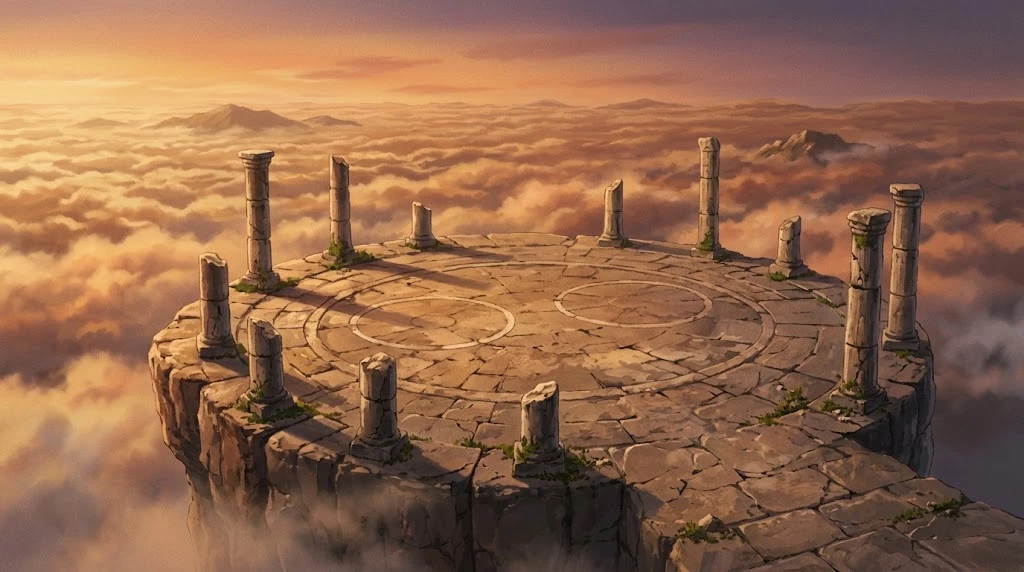
Every fight in Duskar is calculated from the warriors’ stats, their attacks, races and auras, and a random roll stored with the fight, so a report always shows exactly what happened. Knowing what makes a hit land and what makes it hurt is what turns a strong roster into a team that wins. This page covers the rules shared by expeditions, the league, tournaments, sagas and sieges.
Three ways to fight
| Format | Who fights | How it ends |
|---|---|---|
| Duel | One warrior against one | A knockout, or after 50 rounds the higher HP wins |
| Relay | Two lines of warriors, one duel after another | When one side has no fighter left |
| Brawl | Two whole teams at once | A knockout of a whole side, or after 30 rounds the higher total HP of the living wins |
Where you meet them, and what happens to your warriors’ health:
| Fight | Formats | HP afterwards |
|---|---|---|
| Expeditions | Duel, relay, brawl | Damage stays, heal your team |
| League | Duel, relay, brawl | Both sides start at full HP, nothing is lost |
| Tournaments | Duel, relay, brawl | Both sides start at full HP, nothing is lost |
| Friendly fight | Relay | Nothing is lost |
| Masters’ trials | Duel | Nothing is lost |
| Sagas | Duel, relay, brawl | Damage stays |
| Planetoid sieges | Brawl | Damage stays |
Your team holds five warriors, each of a different species. A warrior with 0 HP cannot fight, and no warrior ever dies in a fight: in Duskar warriors die only of old age.
The seven stats
| Stat | What it does |
|---|---|
| Melee attack | The strength of physical attacks |
| Special attack | The strength of special attacks |
| Melee defense | Protection against physical attacks |
| Special defense | Protection against special attacks |
| Concentration | Hitting and dodging |
| Speed | Who moves first and the chance of an extra move |
| Condition | Maximum HP; it falls with every hit |
Every level adds the species’ growth to each stat, and condition grows twice as fast. Training, capsules and masters add more; see warrior life.
Attacks and the rotation
Every warrior fights with exactly five attacks, set in the order you choose. It uses them in turn: the first, the second and so on, then back to the first. An attack with a cooldown is skipped that many times after each use, so the warrior moves on to the next slot.
| Type | Uses | Damage |
|---|---|---|
| Physical | Melee attack against melee defense | Yes |
| Special | Special attack against special defense | Yes |
| Status | No stats | None, only effects |
Every attack also belongs to one race. Training the stat that does not match your attacks is wasted: a warrior with physical attacks gains nothing from special attack. The attacks encyclopedia lists every attack with its power, accuracy and cooldown.
Who moves first
In a duel the faster warrior moves first; on equal speed the challenger starts. After both have moved, a clearly faster warrior sometimes gets an extra move in the same round. The bigger its speed edge, the more often this happens, up to a limit.
Hitting
Each attack has an accuracy, usually between 60 and 100; most status attacks have 1,000 and never miss. Your concentration against the target’s moves the hit chance around the attack’s accuracy: more concentration than the target raises it and less lowers it, but never down to zero.
Status attacks roll to hit as well. The six knockout attacks, with power 1,000, hit at most 20% of the time however high your concentration is.
Damage
A hit deals damage from six things:
- The attacker’s level: damage grows with level, so a higher-level warrior hits harder with the same stats.
- The stats: the attacker’s melee or special attack is set against the target’s matching defense.
- The attack’s power.
- Luck: every hit varies a little.
- The target’s resistance to the attack’s race: 0, 0.5, 1 or 2, changed by auras.
- The own-race bonus: an attack of one of the warrior’s own races deals 10% more.
There are no random critical hits. The heavy blows are the six knockout attacks with power 1,000, about ten times a normal hit, but capped at a 20% hit chance.
Pick attacks of your warrior’s own race when you can, and keep an eye on the races your opponents resist.
Races and resistances
Each of the ten races resists some races and is weak against others. The numbers on a warrior’s card say how much damage it takes from each race: 2 means double damage, 0.5 half and 0 none, so a higher number is worse. Humans, for example, take double damage from Navim and Ilyari attacks and half from Humans, Aureli and Umbrai.
A warrior of two races multiplies both rows, so it can take 4 times or only a quarter of the damage from one race. Auras shift resistances too: a positive change means more damage taken. The full table is in the races encyclopedia.
Status effects
A warrior holds one main status at a time; any new main status replaces it, so a burn can turn into paralysis. Next to it, it can carry parallel effects, one of each kind. Durations count the bearer’s own turns, and a turn lost to a status also stops its attack rotation.
| Main status | Effect | Lasts |
|---|---|---|
| Burn | Loses 9% of current HP every turn | 1-4 turns |
| Firestorm | Loses 10-15% of current HP every turn | 2-3 turns |
| Poison | Loses 3-6% of current HP every turn; poisoned again, deadly poison takes 6-12% | Until the end; deadly for 4 turns |
| Bleed | Six combat stats drop by 2% every turn; bleeding again, by 4% | Until the end; deadly for 3 turns |
| Paralysis | 50% chance to lose the turn | 1-5 turns |
| Freeze | 80% chance to lose the turn, takes half damage; Ice Aura warriors are immune | 1-5 turns |
| Unconscious | Cannot act, still takes damage | 1-4 turns |
| Confusion | 50% chance to attack itself | 1-5 turns |
| Trap | Loses HP every turn, almost as much as the hit that set it | 2-5 turns |
| Curse | Loses 6% of current HP every turn | Until the end |
Some attacks gather energy instead: Channeling keeps the warrior busy for several turns before a strong release, and Rest skips one turn.
| Parallel effect | Effect |
|---|---|
| Tether | Healing works at 30% |
| Block | Takes part or all of the damage of some kinds of attacks, for a number of hits |
| Counter | The next matching attacker loses 150% of the damage it dealt |
| Guard | The next hit loses 70% of its damage |
| Vulnerability | The next hit deals extra damage |
| Regeneration | Heals a little every turn |
| Leech | Drains 3% of the host’s HP every turn |
| Heal Block | No healing at all |
| Ward | Clears negative statuses for three ticks |
| Resistance Shift | Changes three random resistances by 0.5 for five turns |
| Last Stand | Survives one deadly hit with 1 HP |
| Delayed Boon | After 10 turns: a full heal or a big boost to attack or defense |
The attacks encyclopedia says which attack brings which effect.
Relays
In a relay your warriors fight the other side’s line one duel at a time, in the order of the team. The winner of each duel stays in and carries everything into the next one: its HP, statuses, attack order and cooldowns. A drawn duel counts as a loss for your side. The relay ends when one side has nobody left to fight.
Brawls and roles
In a brawl both teams fight at once. Every round the side whose living warriors are faster on average moves first, then the sides take turns. A side with more living warriors gets more moves, so every loss costs it moves at once. The faster side may also get an extra move, as in a duel. Which warrior attacks and whom it targets is down to chance, and roles shift both.
Every warrior can take one role on its card, or none; roles work only in brawls.
| Role | What it does | What it costs |
|---|---|---|
| Ranged | Rarely targeted | Gives up most of its melee attack |
| Tank | Draws attacks: very often at full HP, less as it loses health | Gives up a large part of its melee and special attack |
| Killer | After every enemy move, strikes the enemy with the lowest share of HP if it has 10% or less | Attacks a little less often |
| Destroyer | Attacks much more often | Loses some melee and special defense |
| Supporter | After a teammate’s move, removes its negative main status | Loses a fair part of its speed and concentration |
Only one killer and one supporter per side do their job: the last ones in the line-up. Teams of unawakened warriors have no roles.
In a planetoid siege the defenders fight without roles but with the planetoid’s morale, up to +15% to their stats, while the attackers lose a share of their HP to the defense systems before the fight starts. See planetoids.
What goes into a fight
| Bonus | Expeditions | Friendly | League | Tournaments |
|---|---|---|---|---|
| Aura | Yes | Yes | Yes | Yes |
| Versatile achievement | Yes | Yes | Yes | No |
| Battle armor | Yes | Yes | No | No |
| Synergy | Yes | Yes | Yes | No |
| Weather | Yes | No | No | No |
| Upgrades such as Shield or Wonder Water | Yes | Yes | Yes | No |
- Versatile adds 1% to six combat stats for every 10 levels of your other achievements, up to +30%.
- Battle armor adds 10 to 110 to melee and special defense, by its level.
- Synergy, when high, noticeably strengthens six combat stats.
- Weather helps some auras on the planet you fight on; the weather encyclopedia lists every pair.
- The level-limited tournament cups also take away every point a warrior got from stat capsules.
Unawakened warriors fight with their bare stats, without an aura or bonuses. Only Dark Night weather makes a lone unawakened opponent much stronger.
When both fall
If both sides fall in the same move, the fight is a draw, unless a recoil attack caused it: then the side that used the recoil attack loses. After the round limit, the side with more HP wins: in a duel the warrior’s HP, in a brawl the total HP of the living.
After the fight
- XP. Only expedition fights give XP, yen and synergy. A won duel gives XP by how hard the fight was: more for a stronger, higher-level opponent. A brawl gives XP to every team warrior by the number of rounds, more for a win; a relay gives each warrior XP for the duels it won.
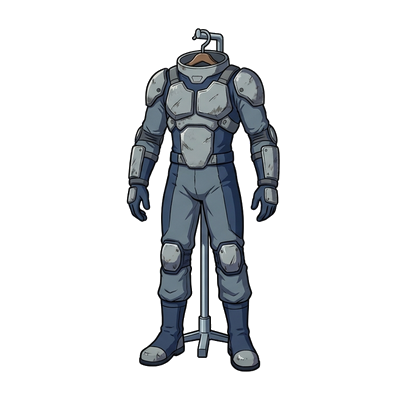
- The 20-XP cap. The base XP is at most 20 per warrior. The Weighted Suit, Night Storm (×1.5), Stormy weather (a 10% chance of ×2) and an XP surge (×5) multiply it afterwards, so a fight can give more than 20.
- Yen. A won relay pays more yen; a won brawl pays less but gives XP to the whole team.
- Synergy. A win raises the fighters’ synergy and a loss lowers it.
- Health. Expedition damage stays until you heal. A Life Fruit Sack lifts every team warrior back to 40%, 80% or 100% of its HP after each expedition fight.
- A second try. After a lost expedition duel an Elixir of Power heals your fighter and starts the fight again, once per meeting.
Every fight report is kept for 30 days. Save up to 50 fights to keep them for good, and share a saved fight through a public link if you want.
Art from the game

Physical attacks: melee attack against the target's melee defense. 
Special attacks: special attack against the target's special defense. 
Status attacks deal no damage. They only bring their effects. 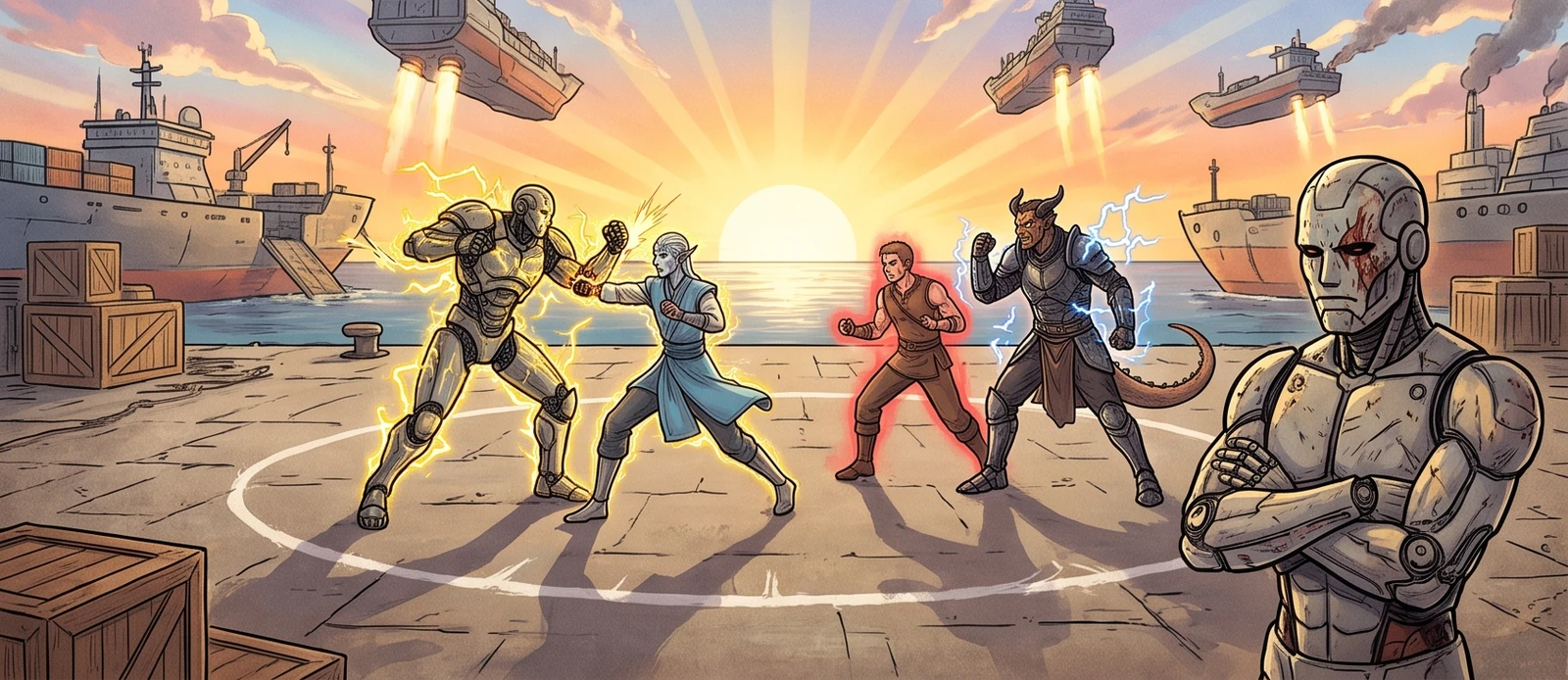
Chronicle page II.18, Hands That Let It Through: a mixed team of a human, an Ilyari and a Draveth spars in a chalk ring on a harbour of Zalnyr while a Mekari watches. 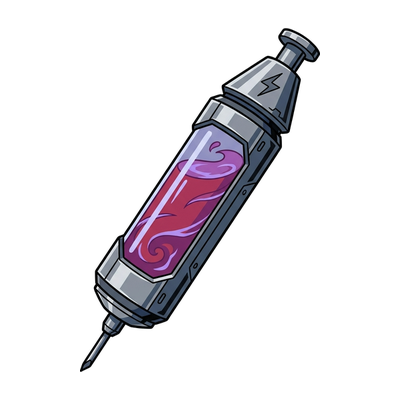
Elixir of Power: one rematch after a lost expedition duel, with your fighter healed first. 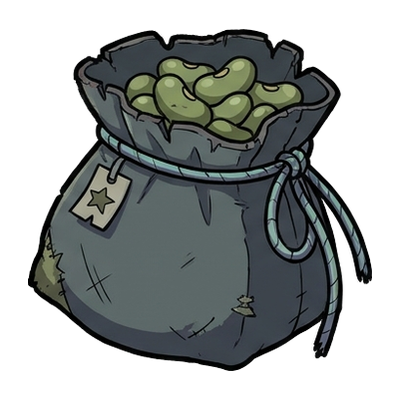
Life Fruit Sack I: for a day, every expedition fight leaves your team with at least 40% of its HP.
Questions players ask
What do the numbers next to the races mean?
They are resistances: how much damage the warrior takes from attacks of that race. 1 is normal damage, 2 is double, 0.5 is half and 0 is none, so a higher number is worse. A warrior of two races multiplies both rows, and its aura can move some of the numbers up or down.
What can an attack do to my warrior?
Apart from damage, many attacks bring a status. The main ones are burn, firestorm, poison, bleed, paralysis, freeze, unconsciousness, confusion, trap and curse; a warrior holds only one of them at a time, and a new one replaces the old. Beside it a warrior can carry effects such as tether, block, counter, guard, regeneration, leech or ward, one of each kind.
How do team fights and roles work?
In a brawl both teams fight at once: the side with the faster warriors on average moves first, then the sides take turns. Each warrior can take one role, ranged, tank, killer, destroyer or supporter, which changes how often it attacks or is attacked at the cost of some stats. In a planetoid siege the defenders fight without roles, but with the planetoid's morale bonus.
What does synergy do in a fight?
High synergy noticeably strengthens six combat stats, and the higher it is, the bigger the boost. Low synergy does nothing in a fight. Synergy grows with won expedition fights and synergy capsules and drops with lost ones.
In the encyclopedia
- 376Attacks and techniques
Every attack and technique in Duskar with its type, race, power, accuracy, level and cooldown.
 10Races
The ten races of Duskar and the damage table between them: which races resist each other's attacks and which take double damage.
 17Auras
Every aura in Duskar: its awakening power, what it does in fights, the weather that boosts it, its price and where to find it.
 29Weather
Every weather in Duskar by day and night: how often it comes, what it changes on expeditions and for awakening, and the locations it opens.
 Weighted Suit I